
Company
2026-05-26
Techmation Hosts Closed-Door Rust Seminar to Explore Next-Gen ICS Roadmap via Root of Trust and Secure Software Architecture
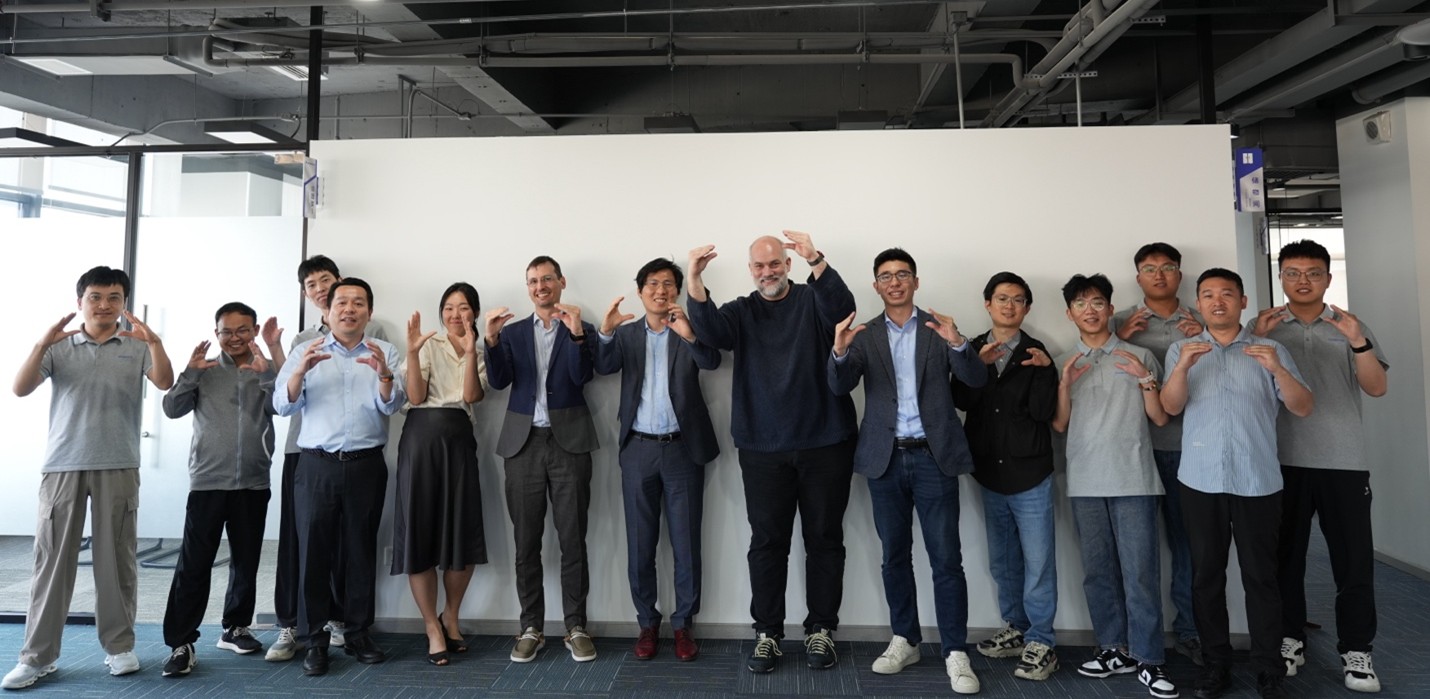
Ningbo Techmation Co., Ltd. (the "Company") successfully hosted a two-and-a-half-day exclusive technical seminar on the Rust programming language at its Chengdu subsidiary from May 20 to 22, 2026.
Centering on the core theme of "Safety, Performance, and Long-Term Maintainability of Industrial Control Software," the seminar featured Florian Gilcher, a founding board member of the Rust Foundation. Gilcher engaged in deep strategic and technical discussions with Techmation’s core R&D pioneers and technical management teams. The exchange focused on the feasibility, integration paths, prototyping directions, and upcoming Proof-of-Concept (PoC) frameworks for applying Rust within industrial controllers and Human-Machine Interface (HMI) products.
The Evolution of Smart Manufacturing and Software Sustainability
As industrial equipment accelerates toward interconnected, digitalized, and intelligent ecosystems, the functional demands on industrial controllers and HMIs are multiplying. Modern controllers must not only ensure stable motion control, process execution, and real-time responsiveness but also increasingly handle data acquisition, diagnostics, security upgrades, and cross-device connectivity. Concurrently, HMIs have evolved from traditional display terminals into mission-critical interactive hubs managing device controls, parameters, operational data, and maintenance services.
Consequently, the competitiveness of industrial control products is no longer defined solely by control precision and response speed. Instead, it hinges heavily on trusted system operations, secure software maintenance, and the capability for continuous evolution across the entire product lifecycle.
Rust’s Value in Safety-Critical and Embedded Systems
During the seminar, Florian Gilcher highlighted Rust’s technical value in safety-critical systems and embedded applications. As a systems programming language, Rust maintains high runtime performance and granular resource control. Crucially, through its distinct ownership model, borrowing mechanisms, and strict type system, Rust mitigates software defect risks stemming from memory access, resource management, and concurrency operations during the compilation phase. These robust safety mechanisms make Rust exceptionally well-suited for embedded and performance-sensitive industrial use cases.
The technological progression of industrial control products demands tight synergy between hardware platforms and software architecture. As the foundation, chipsets dictate runtime performance, communication compatibility, long-term stability, and scalability. Techmation has already successfully mass-produced and shipped products equipped with its proprietary underlying chipsets, establishing a rock-solid hardware foundation for continuous R&D and technological evolution.
Synergy Between Silicon Capabilities and Software Security Architecture
A key highlight of the seminar was the discussion on the symbiotic relationship between silicon-level capabilities and secure software architectures. Techmation emphasizes that trusted operations in industrial control systems require mutual reinforcement from both hardware and software. While the underlying chipsets provide the execution vehicle for control programs, communications, and data processing, the software architecture directly determines development quality, complex feature management, and long-term maintenance efficiency.
As controllers and HMIs become increasingly complex and application boundaries expand, it is imperative for the Company to explore viable paths combining modern software development methodologies with underlying hardware capabilities to enhance device reliability, software maintainability, and lifecycle management.
Moving Forward: From Feasibility Assessment to PoC Evaluation
Following prior internal technical exchanges, this specialized seminar serves as a pivotal milestone to clarify the focus of upcoming technical validations. It marks the transition of Techmation's Rust research from initial feasibility assessments into the active prototyping and PoC evaluation phase. Moving forward, the Company will prudently evaluate specific application scopes and integration timelines based on rigorous testing results, product development demands, and customer deployment scenarios.
As a long-term leader in industrial automation and control systems, Techmation remains dedicated to fortifying its R&D capabilities in industrial controllers and HMIs. Looking ahead, the Company will continuously monitor emerging trends across industrial control software, underlying silicon, and related security technologies. Striking a vital balance between real-time responsiveness, reliability, and stable operations, Techmation will steadily advance technical research and product validation to elevate the long-term competitiveness of its portfolio and deliver superior value to global customers.
Safe Harbor Statement / Disclaimer
The technical seminars, evaluations, prototyping, and future application directions mentioned in this press release represent exploratory initiatives undertaken by the Company based on industry trends and internal technological roadmaps. They do not indicate that the related technologies have achieved large-scale commercial application across all product lines, nor do they constitute guarantees or promises regarding the Company's future financial performance, product efficiency, or market penetration. Future progress regarding these technologies will be prudently advanced in accordance with actual product validation, customer requirements, market conditions, and overall operational strategies.